What to do if you see a raid
Raids are stressful environments for everyone. You most likely will forget to do some of the things written here and that’s ok. Keep calm and remember you are doing your best. Focus on listening to the person being targeted and supporting them
1 – Talk to the person/people being targeted – take your lead from them, they will have their own strategies, but remind them they do not have to answer any questions and can leave at any time if not under arrest. If the person doesn’t speak english you can use google translate on your phone. Think about using headphones so officers can’t hear what the person is saying. If they want to leave, walk away with them.
Translations of the key information in a range of languages can be found at https://antiraids.net/immigration-checks-know-your-rights/
2 – Call other people to help message the signal/whatsapp Antiraids Alerts groupchat, call your friends, ask for help from people on the street
3 – Talk to the officers. It is useful to grab their attention so the person being raided has space to leave and decide what to do. You can ask them:
- To show their Immigration Officer ID.
- What their ‘reasonable suspicion/belief is for searching these particular people.
- To see the warrant (if relevant)
- Any other questions that come to mind. You can ask random questions like where they got their hair cut
4 – Film the officers– not the person being raided or people responding
If people are being detained
- Ask if there is anyone they want you to contact to let them know they have been detained
- Ask for their name
- Remind them they have the right to make a phone call when they arrive to the detention centre
- Remind them they have the right to free legal advice in detention
- Give them the numbers of BID 02074569750 and SDS 07438407570
Gather contact details and make a record of what you’ve seen. Useful information to record:
- Officers ID
- Name of people detained
- Name and contact details of witnesses
- Any videos or picture
Share what you have recorded with Bristol Anti-Raids, the account is admin of the WhatsApp and Signal group chats.
5 – Remind people that immigration can only enter somewhere if they are:
Let In, by informed consent – the most common method. Informed should mean that the people saying yes know they can say no! Even if consent has been given initially the person can change their mind and withdraw consent, that is they can ask officers to leave.
Licensed – somewhere that sells alcohol or late night takeaways
Assistant (directors letter) – someone at the top of the company has signed paperwork saying they have a right to be there, they should show you the paperwork
Warrant they have a warrant to search the premises, ask to see it, take a photo, check the details
Rights when stopped by immigration enforcement : LINK
6 – Go warn neighbors If enough people have responded to the raid, ensure someone goes to let local businesses know, some may want to shut.
If you spot officers walking around even if they haven’t stopped anyone
It has proved really useful to challenge them and ask questions about what they are doing.
They have left as a result in several occasions.
How to spot a raid
Raids are performed by Immigration Compliance and Enforcement (ICE) also known as Immigration Enforcement (IE).
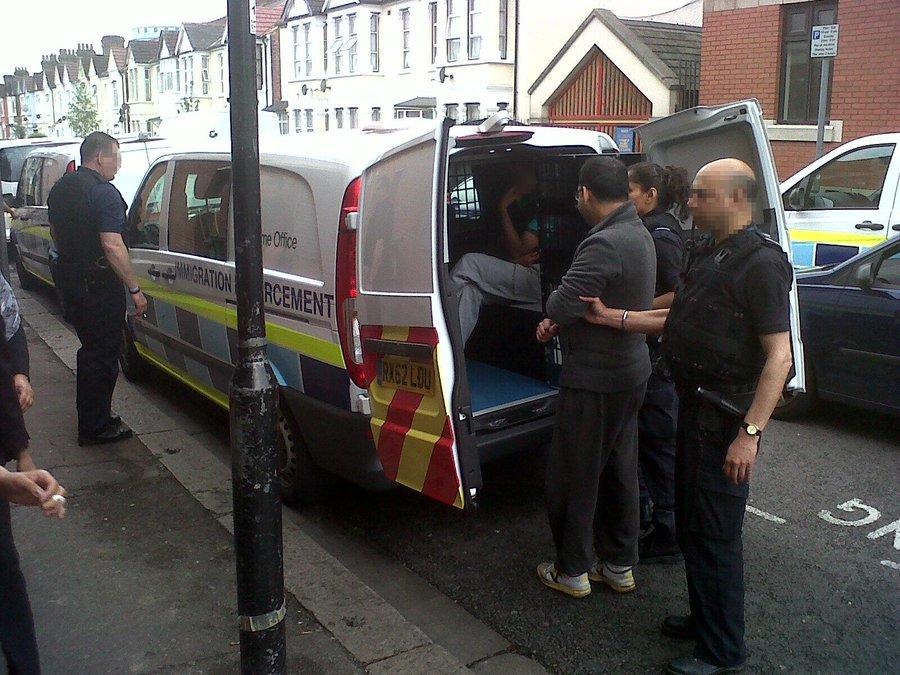
Vehicles: Immigration enforcement travel in marked and unmarked vehicles.
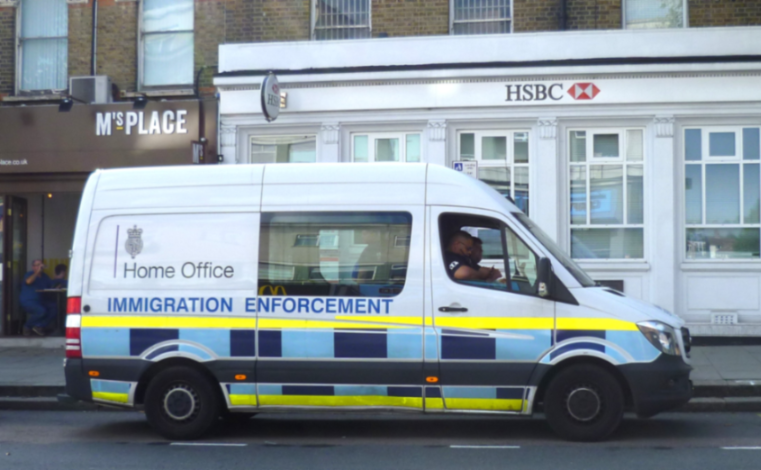

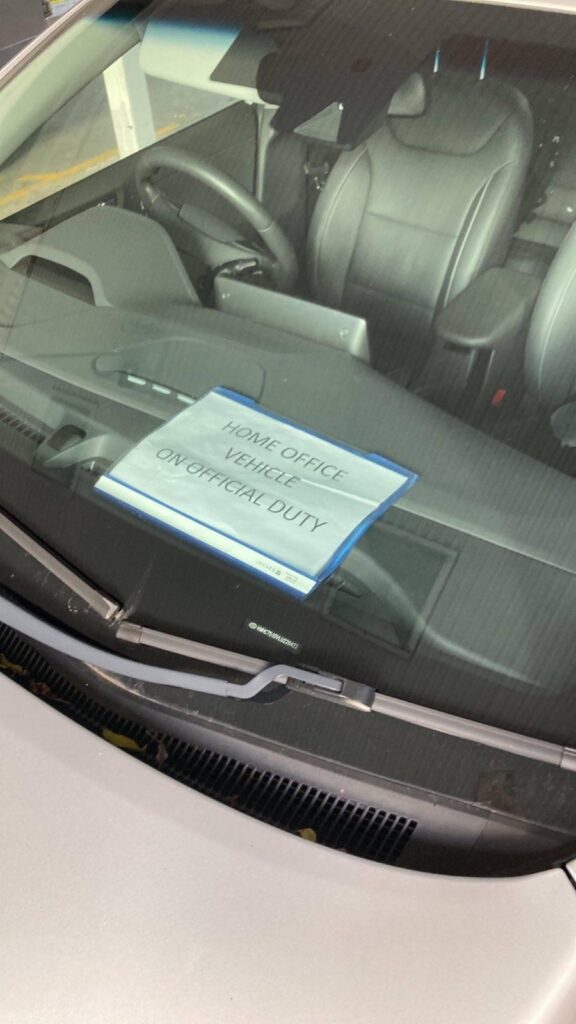
Sometimes unmarked vans have an A4 piece of paper on the dashboard mentioning the Home Office or Immigration
Officers
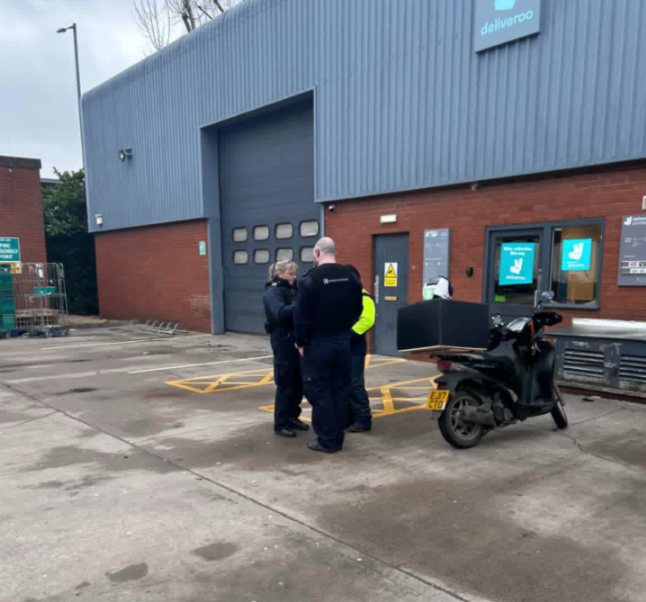
Sometimes in uniform, sometimes in plain clothes.
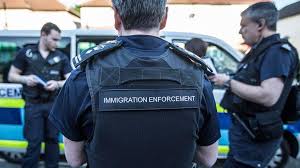
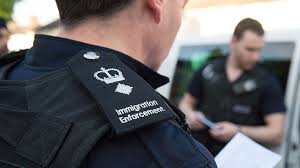
Uniformed officers are dressed in black, wearing stab vests with Immigration Enforcement written in white on the back of them. They usually go to migrant led businesses or houses, but have also been spotted on the street.
If you see uniformed people in migrant led business, stop to see if you can see Immigration Enforcement written on their uniform.
Plain Clothes
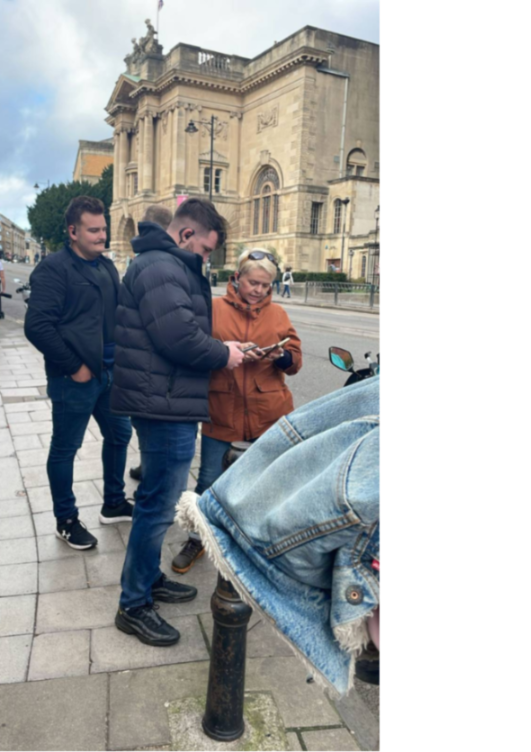
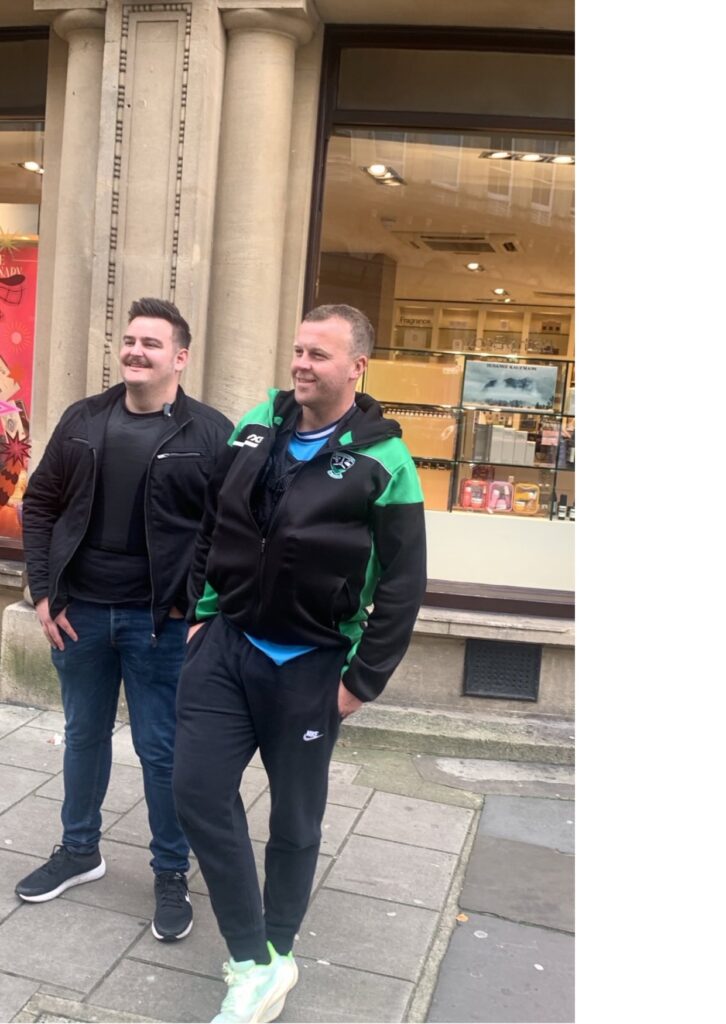
Plain clothes officers usually look like a group of two or more people in casual cloths wearing earpieces and often carrying handcuffs, stopping people at random on the street or in shops.
Plain clothes officers have mostly been stopping delivery drivers at random in the centre or in Clifton around the university by the university. Best way to spot them is looking if they have an earpiece. If you see someone in plain clothes asking a delivery driver for papers check if they have an earpiece.
Tips to spotting raids
Raids are difficult to spot so keep an eye out and investigate of you see something suspicious, don’t just walk by if you’re not sure and you feel safe to do so. It is generally good practice to be aware of our surroundings and check on people if they look like they are in a tricky situation (i.e. being stopped by police or ICE).
If you suspect an immigration raid look for immigration enforcement signs or uniforms, look for number plates that have been already used by ICE, look for people with earpieces.
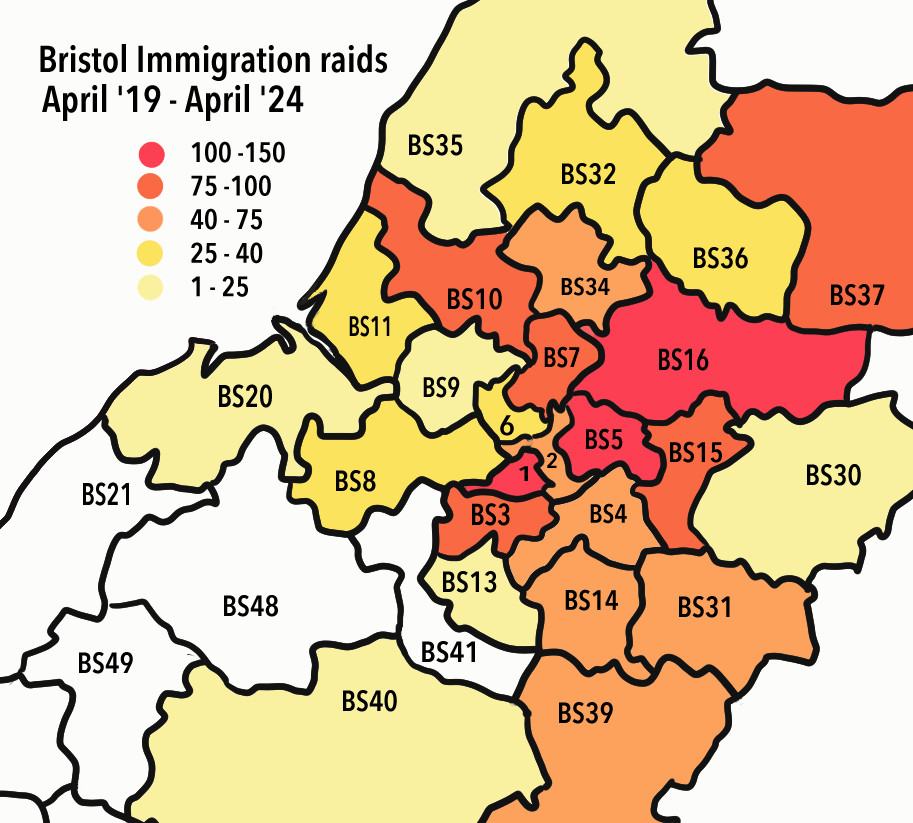
Here are the areas where most raids have been spotted so you know where to be more vigilant.
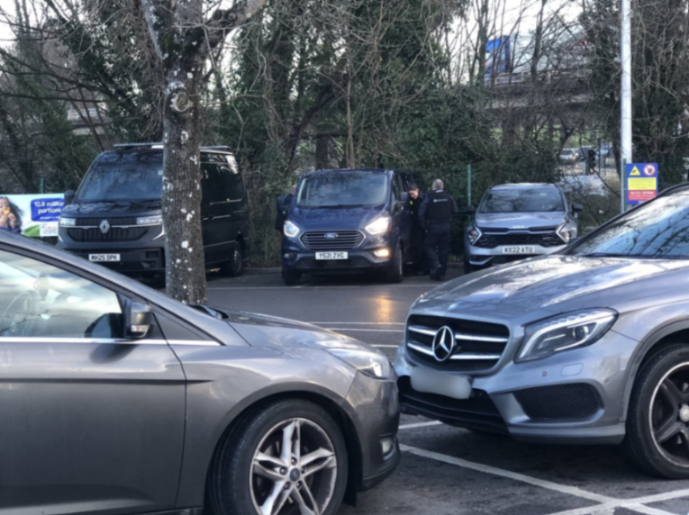
ICE are often spotted waiting to raid or leaving an area. Try to assess what they’re up to, and if they’re just mustering in a supermarket carpark. Make this clear in the post to the group chat and tail them if you feel comfortable to do so.
Are you sure it isn’t a police raid?
The police often work alongside Immigration Enforcement, particularly on traffic stops. If all you see is police, notify copwatch or other community groups, who are better able to respond
Legal Info for responders
As a network we exist to spread information for people to legally resist raids
However, all responses will be within different contexts and we understand that in the heat of the moment, some people may be tempted to put themselves in the way of someones removal. This page exists to provide you with an understanding of what the consequences might be should you do so
IE officers can only arrest people for immigration breaches. The right to citizens arrest is something they could technically exercise, just as any of us could. However they are usually reluctant to do so, preferring to use their direct line to the police. The police usually arrive on the scene very quickly once they are called.
Depending on the circumstances, people may be confronted with these common charges. Some, like Assaulting an Emergency Worker, are routinely fabricated by officers. They may be dropped before trial but cause considerable stress and inconvenience beforehand.
We recommend that everyone, regardless of whether they intend to interact with the police, attends a free Green and Black Cross Legal Know Your Rights briefing, which are regularly held on line and can be accessed on the groups website. However the basics on arrest are always:
If you see someone being arrested resisting a raid, or have been arrested yourself, contact
Green and Black Cross Legal 07946 541 511 or
Bristol Defendant Solidarity 07510 283424 if you are based in Bristol
Common charges associated with unlawful responses to a raid:
Obstructing an Immigration officer:
Obstructing a police officer: https://greenandblackcross.org/guides/laws/obstruct-pc/
Assaulting an Emergency Worker (usually a police officer): (link on GBC site broken)
Obstruction of the Highway if a road is blocked https://greenandblackcross.org/guides/laws/3-obstruction-of-the-highway/
Aggravated Trespass if a business has to close https://greenandblackcross.org/guides/laws/5-trespass-aggravated-trespass/
Breach of the Peace which can be just for swearing in public, you can be arrested but not charged with this: https://greenandblackcross.org/guides/laws/4-breach-of-the-peace/
Tips for a good alert
If you see a raid taking place, immigration officers or an ‘immigration enforcement’ van post a message on the Signal or Whatsapp alerts chat with as much of the following information as you can:
- Time (it is useful to put a time stamp on the message so if it gets shared around other chats people know when it has been sent)
- Exact location (and direction if van moving). You can send a maps link or give street name, any identifying landmarks/buisnesses)
- Number of Enforcement Officers / Enforcement Vehicles
- Plain clothes or uniform? What did they look like?
- What are they doing?
- If you can take a photo safely and without including anyone being detained, please do. Photos of ICE number plates are particularly useful
Example of bad alert:
“IE in broadmead”
Example of good alert:
” 1:15pm. 3 plain clothes officers by McDonalds in Broadmead stopping delivery drivers”
Other resources
View our resources page.